

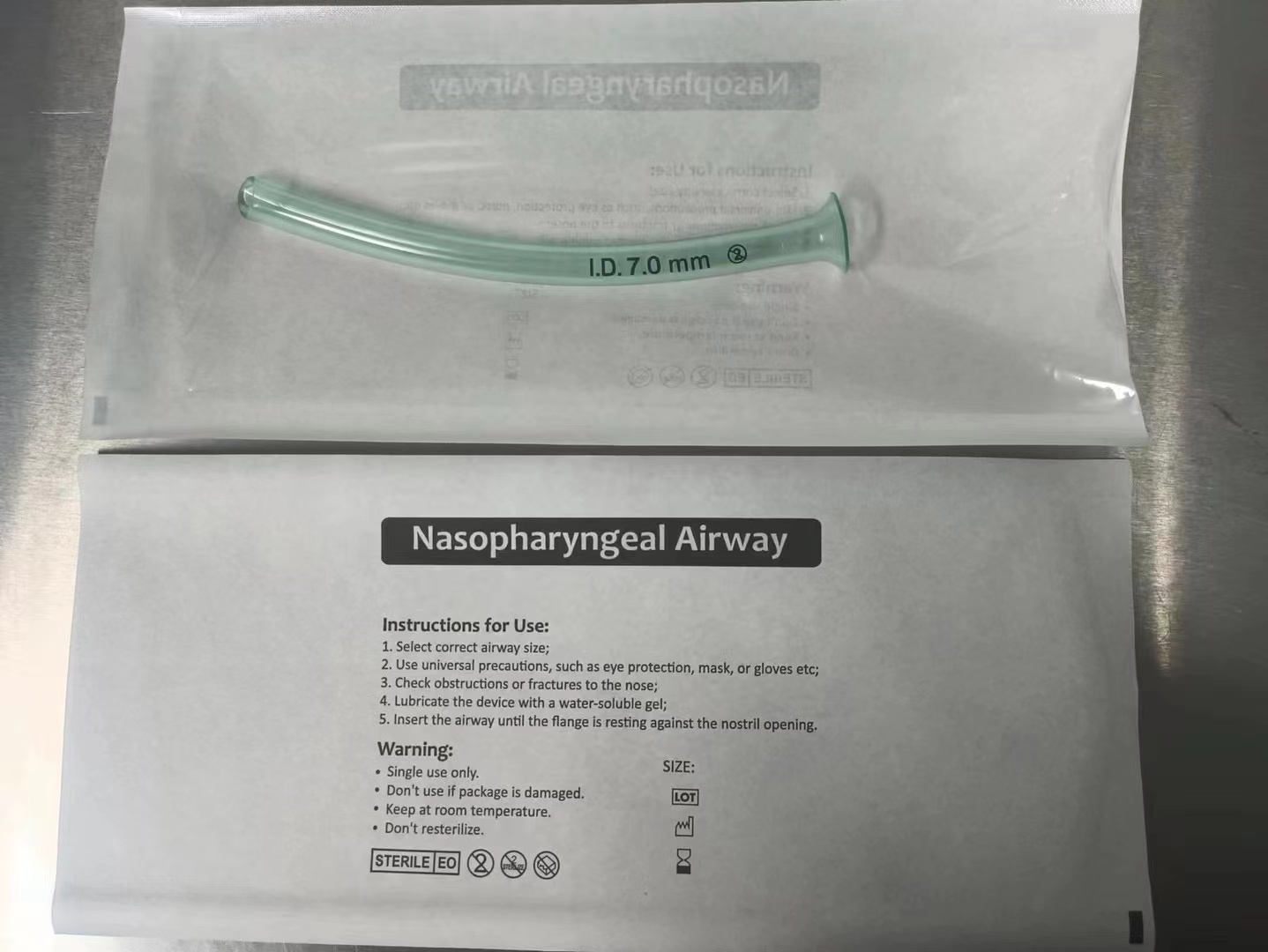
The nasopharyngeal airway is especially suitable for the failure of oropharyngeal airway placement, or the situation where it is difficult to place the oropharyngeal airway, such as difficulty in opening the mouth, too small mouth opening, oral deformity, etc. Since the nasopharyngeal airway does not enter the oral cavity, Therefore, it is suitable for intraoral surgery. Generally, it is suitable for the application of oropharyngeal airway, and most of them are also suitable for application of nasopharyngeal airway.
Compared with the oropharyngeal airway, the nasopharyngeal airway has more stable hemodynamic changes, so it is easier for conscious or semi-conscious patients to tolerate, and it is necessary to keep the artificial airway for a long time when accompanied by airway obstruction. For patients with stable hemodynamics, nasopharyngeal airway should be the first choice.
1 Clinical anesthesia
The use of nasopharyngeal airway during anesthesia can be roughly divided into three situations: airway management without intubation, tracheal intubation during induction of general anesthesia, and after extubation of the tracheal tube:
(1) Applied to airway management without intubation, including prevention and treatment of upper airway obstruction under various anesthesia methods. It is often used for outpatient surgery anesthesia. Because outpatient surgery is usually small and takes a short time, it is often used Intravenous general anesthesia, such as painless abortion, painless gastroscopy, colonoscopy examination and treatment, etc., if you encounter obese patients, upper airway obstruction is almost inevitable, nasopharyngeal airway is effective for outpatient surgery;
(2) During the anesthesia induction period of general anesthesia with tracheal intubation, the difficult airway can be improved by presetting the nasopharyngeal airway, and the acute upper airway obstruction of adult patients before tracheal tube insertion can be relieved;
(3) Applied after the removal of the tracheal tube. Since the anesthetic drug has not been completely metabolized in the body, if the tracheal tube is removed prematurely, it is easy to cause airway obstruction caused by tongue falling back. For obese patients, the nasopharyngeal airway can also better maintain general anesthesia The patency of the upper airway during the recovery period. For patients with severe obstructive sleep apnea-hypopnea syndrome, nasopharyngeal airway plays an important role in reducing postoperative cardiovascular accidental death.
2 First aid resuscitation
According to the principle of the nasopharyngeal airway, the pharyngeal end of the nasopharyngeal airway after placement is close to the glottis to support the posterior pharyngeal wall, thereby releasing the pressure of the pharyngeal cavity on the glottis and maintaining the airway. The nasopharyngeal airway can be connected Therefore, in case of difficult airway, nasopharyngeal airway can also be used as an effective first aid tool. "2010 American Heart Association Guidelines for Cardiopulmonary Resuscitation and Cardiovascular Emergency Aid" advocates that in the process of emergency resuscitation, the first aid should be Use supraglottic ventilation instead of endotracheal intubation, and nasopharyngeal airway is one of the important options.
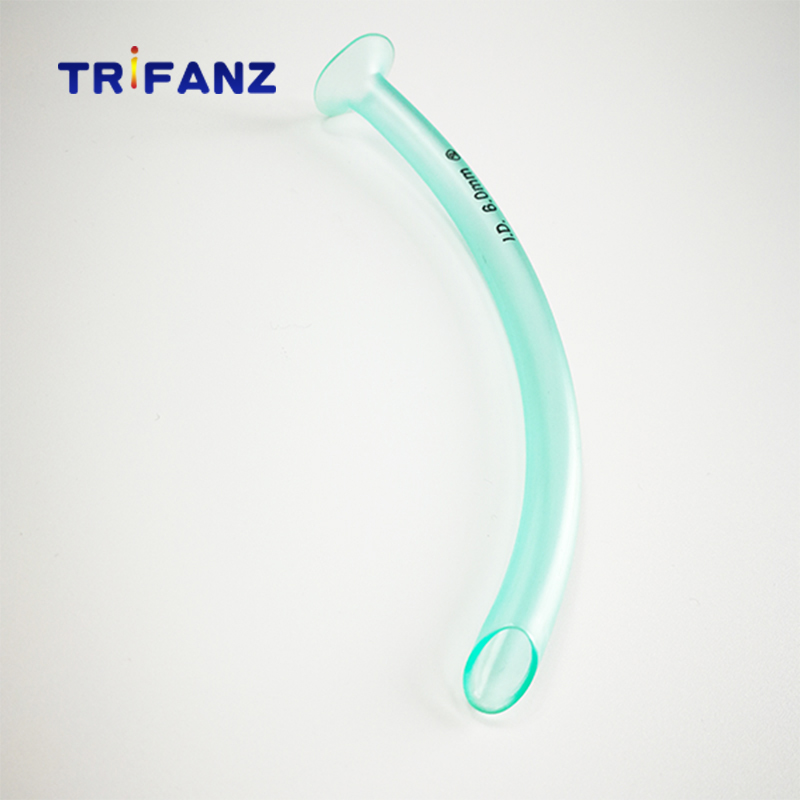
Due to the low injury of nasopharyngeal airway, the application of nasopharyngeal airway is the safest way to solve acute upper airway obstruction in infants. During cardiopulmonary resuscitation, nasopharyngeal ventilation can be placed if no advanced airway is established for artificial ventilation with simple respirators and masks.
3 Critical care
In the Department of Respiratory Medicine and ICU, the nasopharyngeal airway can be used as an auxiliary device for non-invasive respiratory therapy. For example, for patients with coma, epileptic seizures, and patients with difficulty in opening their mouths, the nasopharyngeal airway has become the preferred ventilation device. Especially for upper For critically ill patients with airway obstruction, the nasopharyngeal airway can be placed easily and quickly, which can effectively solve the problem of difficult airway management. For some other rare diseases, such as Pierre Robin (Pierre Robin syndrome) patients, the main manifestations For micrognathia, tongue root drop and inspiratory airway obstruction, the use of nasopharyngeal airway can effectively solve the airway obstruction.